
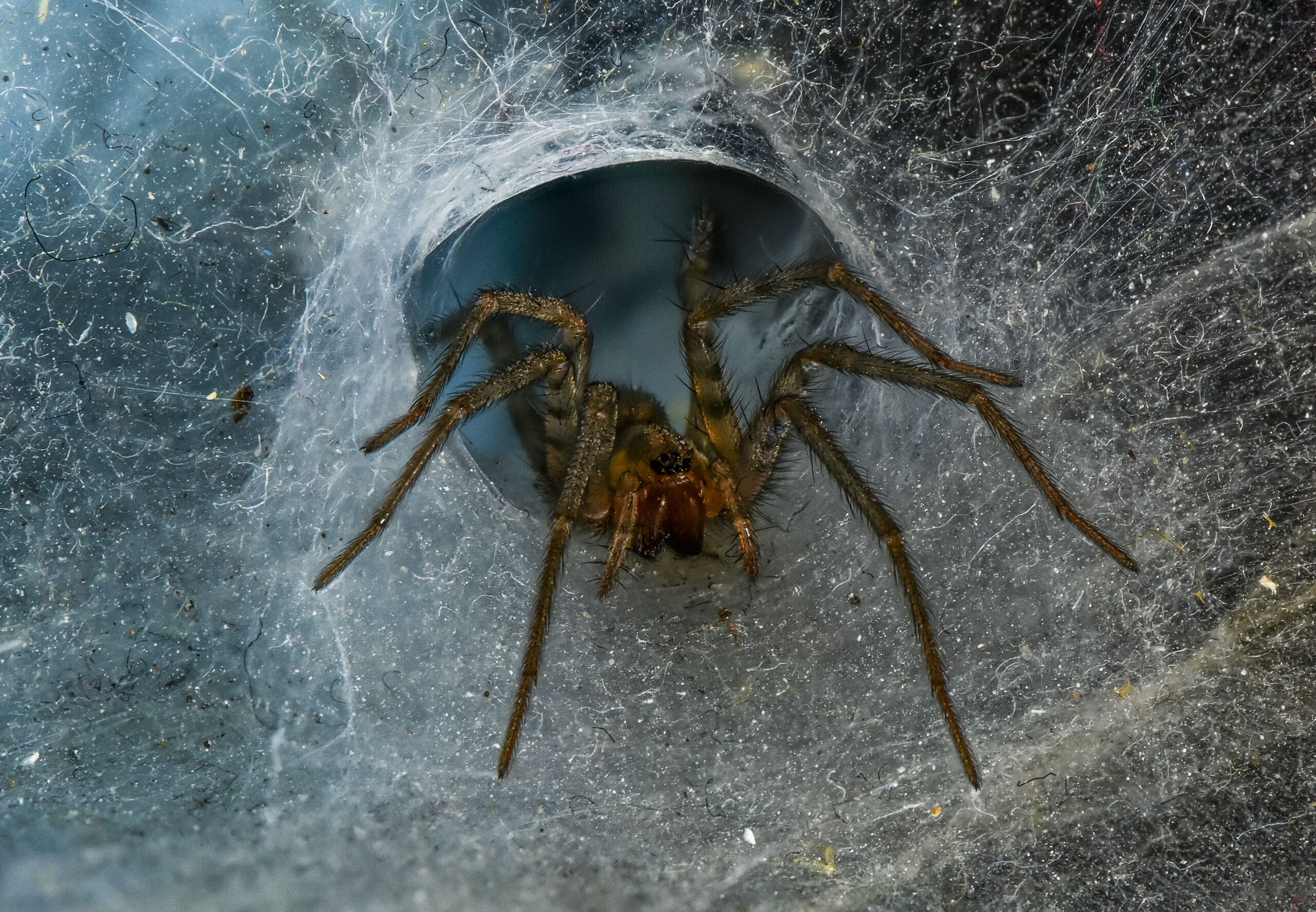
Spiders can make a Maryland home feel anything but comfortable. At Bug Squashers of Maryland, we help Hanover-area homeowners knock back spider populations before they take over basements, garages, and quiet corners. We inspect the hiding spots spiders love, knock down webs and egg sacs, and treat the entry points and harborage areas where they breed—so you stop seeing them inside. With targeted treatment and guaranteed results, we make spiders one less thing you have to think about.

Tired of cobwebs in every corner and spiders showing up in your shower? Our team at Bug Squashers of Maryland is here to help.
Spiders are opportunists—they’ll move into basements, garages, attics, and crawlspaces wherever there’s shelter and a steady food source. Bug Squashers uses a thorough process that knocks down current populations and makes your home far less inviting to the next wave. Here’s how we solve your spider problem:
We start with a detailed inside-and-out inspection of your home. We look for active spiders, webs, and egg sacs in the spots they favor—basements, garages, eaves, window wells, woodpiles, and clutter. Identifying the species and where they’re harboring lets us build a treatment plan that actually works.
Web and egg sac removal is one of the most overlooked steps in spider control. We knock down accessible webs and egg sacs around the exterior and key interior areas. This breaks the cycle—because every egg sac you leave behind can hatch dozens of new spiders.
We apply residual treatments to the cracks, crevices, voids, eaves, and foundation lines where spiders travel and rest. We also treat the insects spiders feed on—because if you remove their food source, they don’t stick around.
We help identify the gaps, cracks, and screen issues that let spiders in. We’ll advise on simple fixes around doors, windows, vents, and the foundation, and we’ll recommend ways to cut back exterior harborage—stacked wood, leaf litter, and cluttered storage areas.
Spider control works best as an ongoing program. Regular service visits keep populations down, remove new webs and egg sacs before they hatch, and adjust treatments as the seasons change. With Bug Squashers of Maryland, your spider problem stays solved—not just suppressed.
One spider is easy to ignore. The problem is that spiders are quiet, nocturnal, and very good at staying out of sight—so by the time you’re noticing them regularly, the population is usually already established. Here are the signs Maryland homeowners should watch for.
Fresh webs in corners, around windows, behind furniture, in basements, or along garage ceilings are the most common sign. Different species build different web styles—messy “cobwebs,” tight funnels, or orderly orb webs—but any active webbing inside the house points to spiders making themselves at home.
Spider egg sacs are small, round, papery or silken pouches—often tucked under furniture, in basement corners, behind boxes, or under eaves. A single egg sac can hold dozens to hundreds of spiderlings, so finding one is a clear sign to act.
If you’re seeing spiders in the same rooms over and over—especially basements, laundry rooms, bathrooms, and garages—you’re looking at a harborage area. They’re finding food, water, and shelter where they’re showing up, and they’re not moving on.
Spiders go where the food is. If you’ve noticed flies, gnats, mosquitoes, or other small insects building up around the house, spiders won’t be far behind. A good spider program treats the food source, too.
Most spiders in Maryland are harmless, but black widows and brown recluse spiders do show up here and can deliver a serious bite. If you spot a shiny black spider with a red hourglass marking, or a brown spider with a violin-shaped marking on its back, don’t handle it—call a professional.
If you’re seeing any of these signs, it’s time to bring in the experts. Bug Squashers of Maryland will find the problem, treat it, and help keep it from coming back.
The spiders you see most often in Maryland homes—house spiders, wolf spiders, cellar spiders, jumping spiders, and grass spiders—are nuisance pests, not medical threats. The two that do matter are the black widow and the brown recluse. Both are uncommon, but both do show up in Maryland, especially in basements, garages, sheds, and stored items.
A house with a lot of spiders almost always has a lot of other bugs. Spiders show up because something is feeding them. Long-term spider control is really about controlling the prey insects—flies, gnats, crickets, and moths—at the same time.
A single female spider can produce multiple egg sacs in a season, and each one can hold dozens to hundreds of spiderlings. Missing egg sacs during treatment is the #1 reason DIY spider control fails. Professional service finds them and removes them.
Spiders favor undisturbed, sheltered spots: basement corners, behind storage boxes, in garage rafters, under decks, behind shutters, around exterior light fixtures, and in window wells. If those spots aren’t treated, the population just rebuilds every year.
Exterior lights attract the insects spiders eat—so they cluster around porch lights, garage lights, and lit windows. Switching to yellow “bug lights” and keeping outdoor lights off when not needed makes a real difference.
At Bug Squashers of Maryland, we identify the species, locate the harborage, remove webs and egg sacs, and treat for the spiders and the insects they feed on. From cellar spiders to wolf spiders to black widows—we’ll squash the problem for good.
Don’t let spiders take over your home—Bug Squashers is one call away.
Tired of cobwebs in every corner and spiders showing up in your shower? Our team at Bug Squashers of Maryland is here to help.
Spiders are opportunists—they’ll move into basements, garages, attics, and crawlspaces wherever there’s shelter and a steady food source. Bug Squashers uses a thorough process that knocks down current populations and makes your home far less inviting to the next wave. Here’s how we solve your spider problem:
We start with a detailed inside-and-out inspection of your home. We look for active spiders, webs, and egg sacs in the spots they favor—basements, garages, eaves, window wells, woodpiles, and clutter. Identifying the species and where they’re harboring lets us build a treatment plan that actually works.
Web and egg sac removal is one of the most overlooked steps in spider control. We knock down accessible webs and egg sacs around the exterior and key interior areas. This breaks the cycle—because every egg sac you leave behind can hatch dozens of new spiders.
We apply residual treatments to the cracks, crevices, voids, eaves, and foundation lines where spiders travel and rest. We also treat the insects spiders feed on—because if you remove their food source, they don’t stick around.
We help identify the gaps, cracks, and screen issues that let spiders in. We’ll advise on simple fixes around doors, windows, vents, and the foundation, and we’ll recommend ways to cut back exterior harborage—stacked wood, leaf litter, and cluttered storage areas.
Spider control works best as an ongoing program. Regular service visits keep populations down, remove new webs and egg sacs before they hatch, and adjust treatments as the seasons change. With Bug Squashers of Maryland, your spider problem stays solved—not just suppressed.
One spider is easy to ignore. The problem is that spiders are quiet, nocturnal, and very good at staying out of sight—so by the time you’re noticing them regularly, the population is usually already established. Here are the signs Maryland homeowners should watch for.
Fresh webs in corners, around windows, behind furniture, in basements, or along garage ceilings are the most common sign. Different species build different web styles—messy “cobwebs,” tight funnels, or orderly orb webs—but any active webbing inside the house points to spiders making themselves at home.
Spider egg sacs are small, round, papery or silken pouches—often tucked under furniture, in basement corners, behind boxes, or under eaves. A single egg sac can hold dozens to hundreds of spiderlings, so finding one is a clear sign to act.
If you’re seeing spiders in the same rooms over and over—especially basements, laundry rooms, bathrooms, and garages—you’re looking at a harborage area. They’re finding food, water, and shelter where they’re showing up, and they’re not moving on.
Spiders go where the food is. If you’ve noticed flies, gnats, mosquitoes, or other small insects building up around the house, spiders won’t be far behind. A good spider program treats the food source, too.
Most spiders in Maryland are harmless, but black widows and brown recluse spiders do show up here and can deliver a serious bite. If you spot a shiny black spider with a red hourglass marking, or a brown spider with a violin-shaped marking on its back, don’t handle it—call a professional.
If you’re seeing any of these signs, it’s time to bring in the experts. Bug Squashers of Maryland will find the problem, treat it, and help keep it from coming back.
The spiders you see most often in Maryland homes—house spiders, wolf spiders, cellar spiders, jumping spiders, and grass spiders—are nuisance pests, not medical threats. The two that do matter are the black widow and the brown recluse. Both are uncommon, but both do show up in Maryland, especially in basements, garages, sheds, and stored items.
A house with a lot of spiders almost always has a lot of other bugs. Spiders show up because something is feeding them. Long-term spider control is really about controlling the prey insects—flies, gnats, crickets, and moths—at the same time.
A single female spider can produce multiple egg sacs in a season, and each one can hold dozens to hundreds of spiderlings. Missing egg sacs during treatment is the #1 reason DIY spider control fails. Professional service finds them and removes them.
Spiders favor undisturbed, sheltered spots: basement corners, behind storage boxes, in garage rafters, under decks, behind shutters, around exterior light fixtures, and in window wells. If those spots aren’t treated, the population just rebuilds every year.
Exterior lights attract the insects spiders eat—so they cluster around porch lights, garage lights, and lit windows. Switching to yellow “bug lights” and keeping outdoor lights off when not needed makes a real difference.
At Bug Squashers of Maryland, we identify the species, locate the harborage, remove webs and egg sacs, and treat for the spiders and the insects they feed on. From cellar spiders to wolf spiders to black widows—we’ll squash the problem for good.
Don’t let spiders take over your home—Bug Squashers is one call away.


